News
At Terrae, rural chefs are proposing partnerships with producers and colleagues from neighboring countries to raise their profile
The 4th Terrae Gran Canaria International Rural Cuisine Festival concludes with the aim of fostering a movement for rural gastronomy
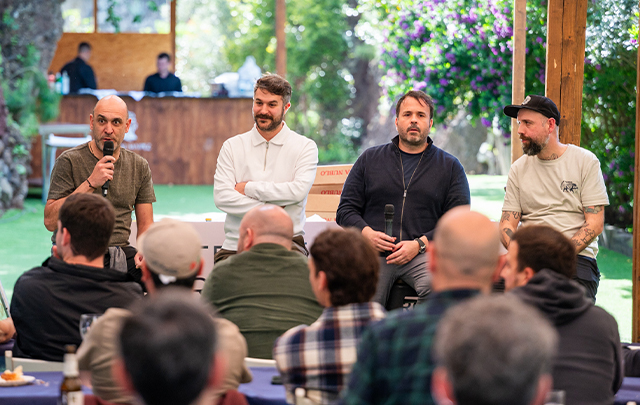
Terrae Gran Canaria is much more than just a conference on rural gastronomy. Over the course of four editions, it has become the seed and driving force behind a movement of rural chefs that grows stronger year after year. As Luis Alberto Lera (Restaurante Lera*, Castroverde de Campos, Zamora), elected by his peers as mayor of the rural chefs, recalled at yesterday’s closing meeting, “we have not yet achieved anything outlined in the 2025 Agüimes Declaration, but the important thing is that this movement continues; weaving a network so that those of us who defend the countryside have a united voice, beyond each of us acting as best we can within our own environments.”
Nacho Solana (Restaurante Solana*, Ampuero, Cantabria), one of the “council members” accompanying Lera in the task of representing a diverse group affected by common problems, was the first of many speakers to advocate for growing the movement and raising its profile by bringing in more chefs, producers, and agriculture-related associations: “Unity is strength. We have a common voice, and I believe this is a movement that can grow. There are many people who could join our wave.” Another council member, Edorta Lamo (Arrea*, Kanpezu), spoke of the need to bring the voice of the countryside to the city and to convey ideas such as “if we want a greener, more natural, and more ecological world, we have to coexist with game meat.” On a more practical level, he advocated for promoting the creation of game meat distribution centers in the various autonomous communities. “A lot of game meat is being discarded, and that is unacceptable, but we have to ensure that this meat can be utilized with health guarantees and within legal channels.”
Rural chefs from Andorra, Italy, and Portugal participated in Terrae 2026. One of the proposals that emerged from the assembly was to expand the movement by inviting “our fellow chefs from Italy, Portugal, and Andorra to join us and combine our efforts.” Juan Carlos García (Vandelvira*, Baeza), another council member from Lera, also considers it important to incorporate “artisans, producers, gatherers, bakers, pastry chefs—the people who can contribute so much to rural life. The real problem in rural areas is that certain trades are dying out and there’s no one to take over. They, too, need to be visible,” he said.
Speaking on behalf of these countries were Carles Flinch (Andorra), Víctor Adão (Portugal), and Giuseppe Ianotti (Italy). “We have many similar problems,” said Adão. “It is important to be able to talk and build bridges. We rural chefs need our own representatives because the restaurant associations do not represent us.” Ianotti (Rte. Kresios**, Telese, Campania) noted that the value of rural people is vital not only for culture but also for a country’s economy: “Industry can move elsewhere where it’s more profitable, but we can’t—we are the land itself. The problem is that we never find the time to talk about our own issues; there’s always something more urgent. There’s a war, there are other things,” he explained.
Among the many obstacles suffocating restaurants operating in rural municipalities, one is the bureaucracy that often prevents them from using their own products. Borja Marrero (Muxgo*, Las Palmas de Gran Canaria) brought this up, calling for “simplifying the bureaucracy that limits and hinders those of us who raise animals, grow crops, or make cheese. We need to be able to register as producers and have a single category for everything.”
In the opinion of Joan Capilla (L’Algadir del delta, Poble Nou, Tarragona), the problems faced by rural restaurants are so specific that “we need a Ministry of Gastronomy to look after our interests, which are quite different from those of large restaurant chains and major business lines.” Pedro Martino (Restaurante Pedro Martino, Caces, Asturias) highlighted the need to support, raise awareness of, and defend producers. “Producers are invisible, and we have to join forces with them and make some noise to bring attention to the problems facing rural areas,” he proposed.
Kiko Moya (L’Escaleta, Cocentaina, Alicante) expressed a sentiment also common among chefs: the weariness of “being ambassadors for the region and going wherever we’re asked to go, only for the very people who call us to forget about us until the following year. “I believe we must demand compensation—such as visibility for our regions, recognition, and involvement in addressing our issues—in exchange for agreeing to participate in promotional events,” he said.
Salva Fernández (Casa Borrego, Bullas, Murcia) advocated for involving city dwellers in defending the interests of rural areas as well, and for using creativity. “We have to be smarter. Because we’re based in tiny villages, we have better-developed skills than other business owners in the sector when it comes to drawing attention to our businesses, and we must use that intelligence to try to turn the tables and have more persuasive power,” he said. Luis Salcedo (Remigio, Tudela, Navarra) highlighted the importance of “raising children’s awareness about food starting in schools, because otherwise, what we do isn’t valued.”
Beatriz Pascual (Basque Country), practically the only female representative who was able to attend this year’s conference—an event where women play a fundamental role—called for “more female chefs and producers to be here next year. We are underrepresented,” she noted.
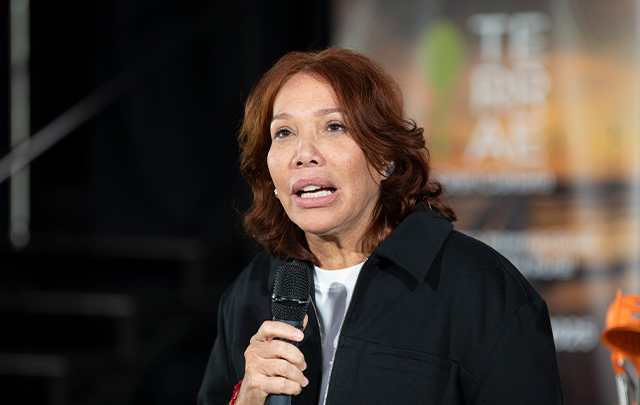
In any case, they highlighted the importance of a conference like Terrae Gran Canaria in raising awareness and shaping a movement that, from a gastronomic perspective, represents possibly the most significant emerging movement in Spanish gastronomy. A movement that has found fertile ground to grow on an island that, as Minerva Alonso, the Gran Canaria Island Council’s Minister of Economic Development, noted at the opening, “is committed to the circular economy, clean agri-food production, gastronomy, and ecotourism.”
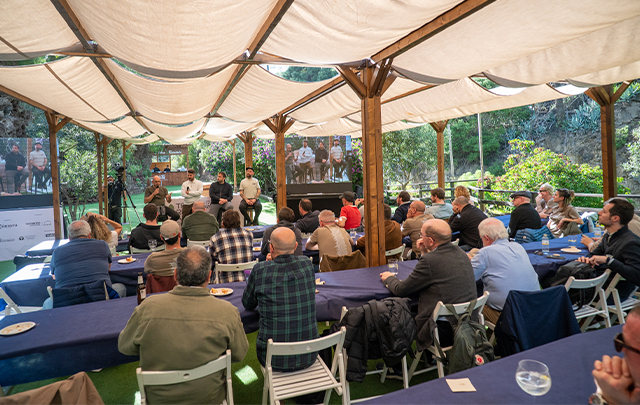
Yesterday’s meeting concluded three days of culinary tastings, presentations on rural gastronomy, and visits to innovative agri-food production projects across the island—ranging from an organic strawberry farm using hydroponics to one of Spain’s highest vineyards, located at an altitude of 1,400 meters. Terrae Gran Canaria has been touring the island for three years. This year, the conference was held in the northwestern region, a mountainous and lushly green area.
Related news
News
At Terrae, rural chefs are calling for a voice of their own and greater institutional support to sustain the region
The movement that emerged around the 4th International Rural Cuisine Conference reinforced its call in Gran Canaria for unity, the protection of small-scale producers, and the streamlining of bureaucracy
News
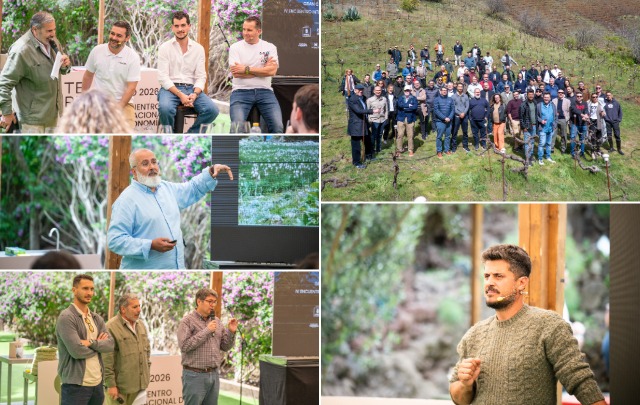
Savoring the Landscape: Wild Plants, Vineyards, and Pork Take Center Stage on the Second Day of Terrae Gran Canaria
The 4th International Rural Gastronomy Festival heads up to the island’s highest vineyard and winds its way back down while teaching participants how to use archaeophytes in cooking
News
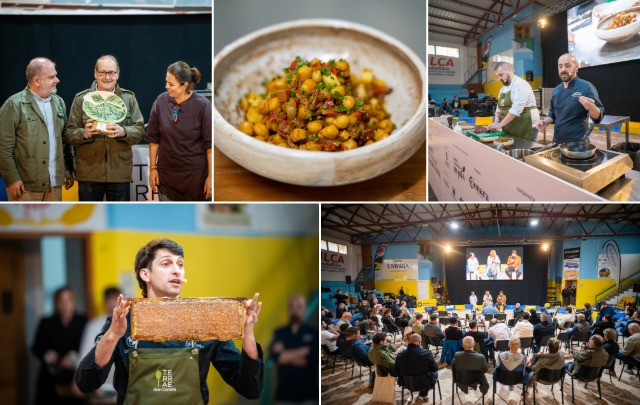
Terrae Gran Canaria proposes creativity and commitment as key to revitalizing rural areas through gastronomy
The 4th International Conference on Rural Gastronomy brings together more than 50 rural chefs from Spain, Italy, Portugal, and Andorra in Gran Canaria
News
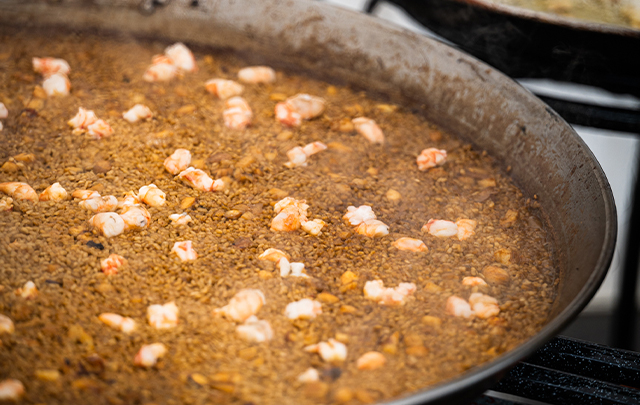
The popular food festival in Santa Brígida was a huge success
The public event ran out of its more than 6.000 samples and drew a large crowd to Villa de Santa Brígida Municipal Park
News
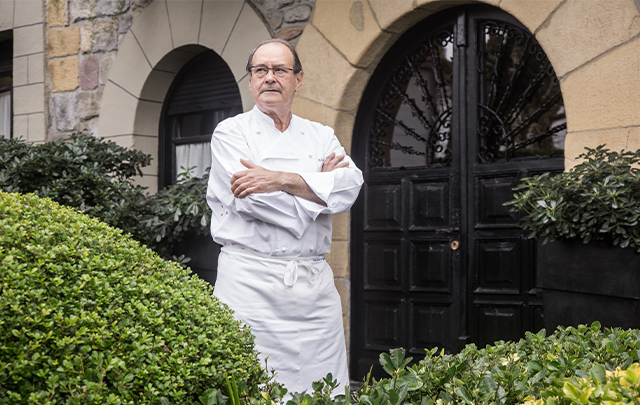
Hilario Arbelaitz to Receive the 2026 Terrae Award
News
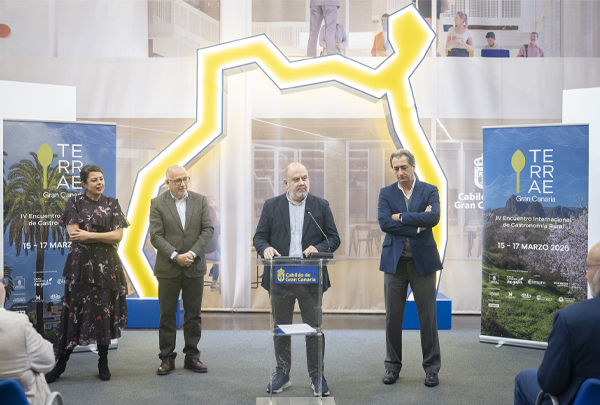
More than 50 rural chefs will gather in Gran Canaria from March 15 to 17 for the fourth edition of Terrae
News
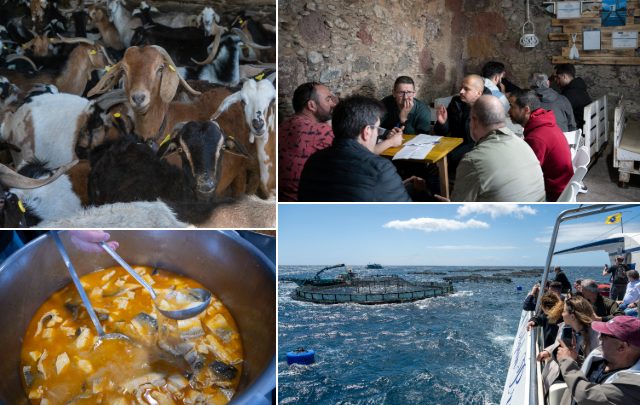
Agüimes Declaration: a commitment to the future of rural cuisine
The more than 50 rural chefs participating in Terrae 2025 have drawn up a document in which they declare rural cuisine to be a cultural heritage and commit themselves to preserving and promoting it.
News
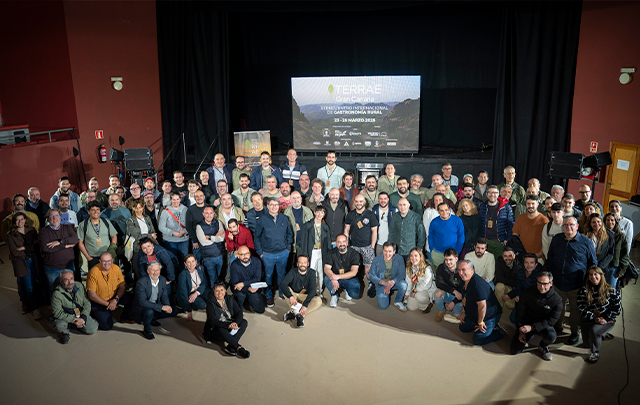
"The soul of cooking is in the villages"
Ignacio Echapresto calls for 'the luxury of immediacy', while Leonor Espinosa calls for a commitment to the rural environment.
News
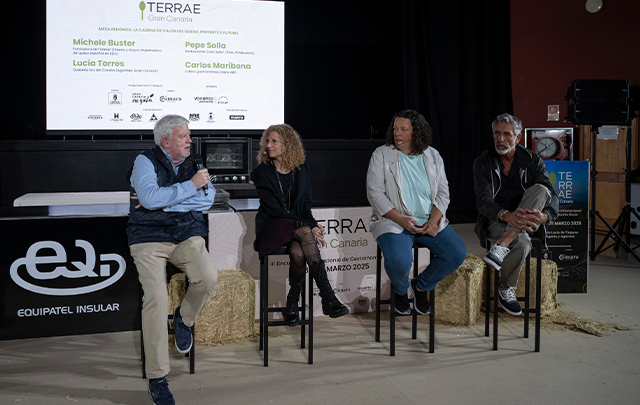
The challenge is to create a differentiated product
News