News
More than 50 rural chefs will gather in Gran Canaria from March 15 to 17 for the fourth edition of Terrae
Gran Canaria will once again become a meeting point for rural gastronomy with the celebration of a new edition of Terrae, which will bring together more than 50 rural chefs in a program that combines gastronomy, reflection, knowledge of the territory, and popular culture. For three days, from Sunday, March 15, to Tuesday, March 17, Santa Brígida, Valsequillo, San Mateo, and other locations on the island will host presentations, round tables, show cooking, visits, and activities all centered around the same idea: promoting rural cuisine as a driving force for identity, local development, and the future.
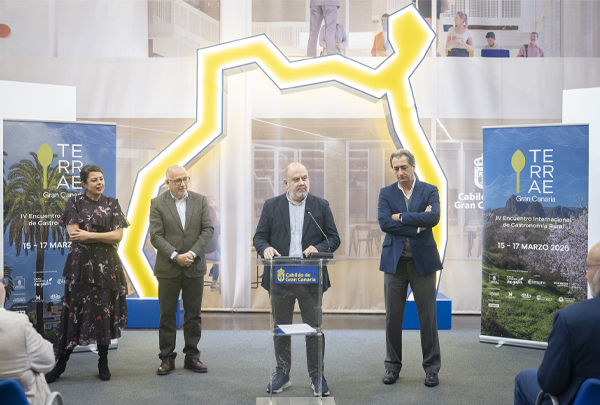
The presentation of the fourth edition of Terrae took place at the headquarters of the Cabildo de Gran Canaria. The Cabildo de Gran Canaria, sponsor of the event, hosted the presentation of TERRAE. There, President Antonio Morales highlighted that this project was born with the ambition of turning Gran Canaria into an international meeting point for chefs committed to the territory and local products.
Morales stressed that the initiative will have a significant economic impact and is part of the Cabildo's strategy to diversify the economy and strengthen the primary sector. “This is not just a gastronomic event, but also a space for reflection on the territory, the sustainability of the sector, and knowledge of the landscape,” he said.
For his part, the president of the Gran Canaria Chamber of Commerce, Luis Padrón, thanked the Cabildo for the trust placed in the Chamber, "for giving us the opportunity to support and collaborate with the Gran Canaria Me Gusta program and all its activities, which number more than 30 per year, including this Terrae Rural event, the only international gathering that combines gastronomy with the rural world and allows capital to be channeled into rural municipalities." He added that the Chamber takes an active role as a collaborator because it recognizes Terrae as a space that promotes strategic sectors and contributes to the economic diversification of the island.
Benjamín Lana, director of Terrae, highlighted that the congress “has already established itself as the major event for rural chefs. There is no other space. This year, the Ministry of Agriculture has even recognized the work with an award that was collected by Luis Alberto Lera, who is already recognized by everyone as the mayor of rural chefs.” He added that “this congress makes the island the epicenter of the debate on territory, identity, and the gastronomic future in rural areas.”
The event will kick off on Sunday, the 15th, with a popular day open to the public in the Municipal Park of Santa Brígida, where 10 chefs from Spain, Italy, and Portugal will participate. Each will prepare 400 servings of a dish that will be sold at affordable prices. There will also be a marquee with cheeses from Gran Canaria and another with wines from the island. The day will continue with an event at the Casa del Vino, where there will be a debate on “Rural Gastronomy,” which will be the first contact of the meeting and will put on the table the role of cuisine in the life of villages and its ability to revitalize the environment.
Monday 16 will begin with a visit to the Fresas La Palma strawberry plantations in Valsequillo, where there will be a strawberry tasting, before moving on to the Valsequillo grounds, where much of the day's program will take place. The day will start with a presentation entitled “Rewilding: promoting the value of the land,” by Mara Zamora, general director of Rewilding Spain. Renaturalization and the rural environment share the same vision for the future: to restore the balance between human activity, landscape, and resources to make the land more alive, more fertile, and more habitable. For rural chefs, this is not an abstract issue, but a concrete opportunity: a more biodiverse and better-preserved environment strengthens agriculture, extensive livestock farming, beekeeping, hunting, gathering and, in general, the quality and uniqueness of local products.
A showcooking of haute cuisine with honey from Valsequillo by Rafel Muria, chef at Quatre Molins* (Cornudella de Montsant, Catalonia), will give way to the presentation of the 2026 Terrae Award to Hilario Arbelaitz, in recognition of a career that has been fundamental to Spanish cuisine. Hilario Arbelaitz occupies an essential place in the recent history of Spanish cuisine because, from Zuberoa in Oiartzun, he spent more than five decades developing a deeply influential style of cooking: elegant, sober, technical, and faithful to family tradition, capable of uniting tradition and modernity without artifice. His mastery cannot be explained solely by the accolades or the restaurant's track record, but rather by having been a silent reference point for generations of chefs, a “master of masters” whose cuisine always put the dish before the ego and demonstrated that excellence could also be achieved through discretion, consistency, and absolute respect for the product and the craft.
Monday's program will continue with a tour of different perspectives on catering in rural areas. Chef Miguel Herrera and his brother Alberto Herrera, from Camino al Jamonal (Las Palmas de Gran Canaria), will star in a show cooking event dedicated to the traditions of Gran Canaria. This will be followed by the round table discussion “Orchestra chefs. The feat of one-person restaurants,” with Martín Comamala, from 539, Plats Forts (Puigcerdà, Catalonia), and Beatriz Pascual, from Restaurante Almazen (Salinas de Añana, Araba), who will share their experiences of business models sustained almost single-handedly.
Another highlight will be “Success with a village soul: rural stories that build community,” a conversation between Vítor Adão, from PLANO Restaurant (Lisbon, Portugal), Ivette Casadevall, from Fundació EMYS (Riudarenes, Girona), and Chema Alonso, from Quesería Quesoba (Cantabria), focusing on projects that have managed to turn gastronomy into a lever for social cohesion, rootedness, and revitalization of the territory. The day will be rounded off with the round table "And after the star, what? Success as a problem. Governing growth" and an exhibition of Canarian wrestling, thus integrating cuisine, reflection, and local culture.
Tuesday 17 will begin with a visit to the Carmelo Peña vineyards in San Mateo, located at 1,400 meters and one of the highest vineyards in Europe, where participants will also be able to enjoy a country breakfast before transferring to the Hotel Maipez, where the activities will continue. There, Juan Carlos Roldán (Otiñar, Jaén), a specialist in the identification, collection, handling, and gastronomic use of wild plants, will give a presentation entitled “The Memory of Plants.”
He is considered one of the leading experts in this field in Spain and has collaborated with haute cuisine restaurants—including several with Michelin stars—contributing his botanical knowledge, memory of the territory, and culinary applications of wild species. The session will continue with a three-part presentation entitled “Three Ways of Understanding Pork,” with Luis Duque (Casa Duque, Segovia), Segovia's oldest rotisserie, since 1895; Alejandro Hernández (Versátil*, Zarza de Granadilla, Extremadura) and Airam Vega (Vega, Ingenio, Gran Canaria).
The last day will also include a guided tasting of six wines from Gran Canaria and a talk entitled “Sweet expansion: from the local to the global market,” which will provide an insight into the growth potential of rural projects in the world of sweets without losing their identity.
Terrae is establishing itself as a benchmark for thinking about the present and future of rural gastronomy from a broad, contemporary perspective that is committed to the region. The presence of more than fifty rural chefs will turn Gran Canaria into the setting for a choral dialogue on the challenges facing the sector: generational change, sustainability, the relationship with producers, managing success, the cultural dimension of cuisine, and its role as a tool for transformation in rural areas.
The list of participating chefs includes dozens of Michelin stars from Spain, Portugal, and Italy: Borja Marrero (Muxgo* Las Palmas de Gran Canaria); Miguel Carretero, (Mengano Wines, Madrid); Alejandro Hernández (Versátil* Zarza de Granadilla, Cáceres); Nacho Solana (Solana*, Ampuero, Cantabria); David Pérez (Ronquillo, Ramales de la Victoria, Cantabria); Luis Alberto Lera (Lera*, Castroverde de Campos, Zamora); Pedro Aguilera (Mesón Sabor Andaluz*, Alcalá del Valle, Cádiz); Joan Capilla (L'Algadir del Delta, Poblenou del Delta, Tarragona); Xune Andrade (Monte*, San Feliz, Asturias); Juan Carlos García (Vandelvira*, Baeza, Jaén); Eduardo Salanova (Canfranc Express*, Canfranc, Huesca); Bruno Jordán (Ansils*, Anciles, Huesca); Samuel Moreno (Molino de Alcuneza*, Sigüenza Guadalajara); Vicent Guimerà (L’Antic Molí*, Ulldecona, Tarragona); Carles Flinch (Can Manel, Andorra la Vella, Andorra); Miguel Ángel Expósito (Retama*, Torrenueva, Ciudad Real); Pepe Ron (Bar Blanco, Cangas del Narcea, Asturias); Diego Schattenhofer (Taste 1973*, Tenerife); Giuseppe Iannoti (Krèsios**, Telese Terme, Italy); José Alvarez (La Costa*, El Ejido, Almería); Rodrigo Castelo (Taberna O Balcao*, Santarem, Portugal); Jesús Colorado (Mesón de Gonzalo, Salamanca); Edorta Lamo, (Arrea*, Santa Cruz de Campezo, Álava); Salva Fernández, (Casa Borrego, Murcia); Gianni Dezio (Zunica 1880*, Italy); Rafel Muria (Quatre Molins*, Cornudella de Montsant, Tarragona); Kiko Moya (L’Escaleta**, Cocentaina, Alicante); Luis Duque, (Casa Duque, Segovia); João Narigueta, (PODA , Montemor-O-Novo, Portugal); Vítor Adão (Plano, Restaurant, Lisbon); Martín Comamala (539, plats forts Puigcerdà Catalonia); Fran Martínez (Maralba**, Almansa, Albacete); Chus Sánchez Manzano (Casa Marcial***, Arriondas Asturias); Ramón Aso (Callizo*, Aínsa, Huesca); Josetxo Souto (Callizo*, Aínsa, Huesca); Toño Rodríguez (La Era de los Nogales*, Sardas, Huesca); José Gordón (El Capricho, Jiménez de Jamuz, León); Luis Salcedo (Choko de Remigio, Tudela, Navarra); Ricardo González Sotres (El Retiro*, Pancar, Llanes, Asturias); Beatriz Pascual (Almazén, Salinas de Añana, Álava); Paco Pérez (Miramar, Llançà, Girona).
A large group of chefs from Gran Canaria will also participate, including Aridani Alonso (Casa Romántica), Saylem Cuevas and Creusa Ramos (Lemusa Catering); Carmelo Mújica (La Trastienda de Chago), Carlos Padilla (Dorotea); Paco Budia (Revés Bistró); José Luis Espino (Grupo Halma); Ruyman González (Los Guayres); Miguel Herrera and Alberto Herrera Santana (Camino el Jamonal); Airam Vega (Rest. Vega); Kilian Nordelo (Catedral Bistró); Alejandro Mederos (Anteo Bar) and Dana Joher (Pastelería AVE).
Related news
News
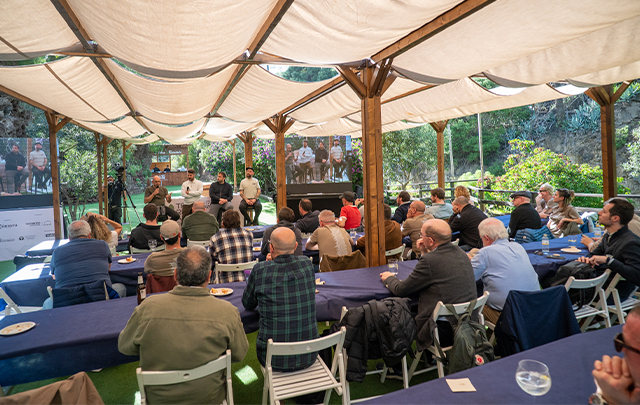
At Terrae, rural chefs are calling for a voice of their own and greater institutional support to sustain the region
The movement that emerged around the 4th International Rural Cuisine Conference reinforced its call in Gran Canaria for unity, the protection of small-scale producers, and the streamlining of bureaucracy
News
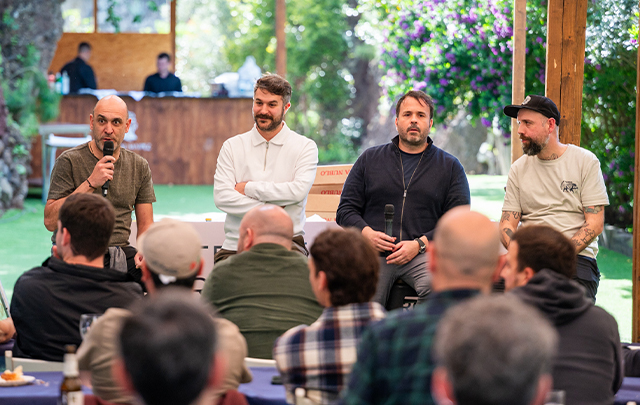
At Terrae, rural chefs are proposing partnerships with producers and colleagues from neighboring countries to raise their profile
The 4th Terrae Gran Canaria International Rural Cuisine Festival concludes with the aim of fostering a movement for rural gastronomy
News
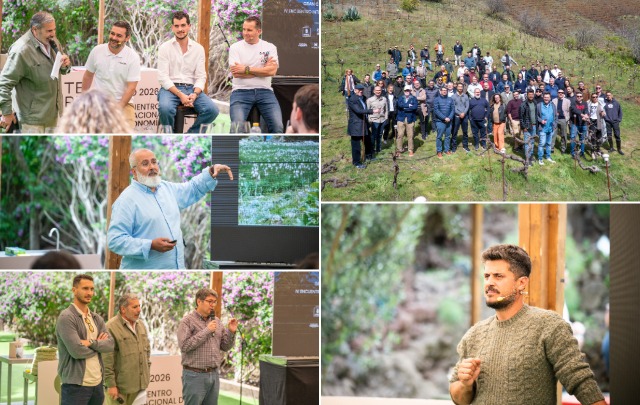
Savoring the Landscape: Wild Plants, Vineyards, and Pork Take Center Stage on the Second Day of Terrae Gran Canaria
The 4th International Rural Gastronomy Festival heads up to the island’s highest vineyard and winds its way back down while teaching participants how to use archaeophytes in cooking
News
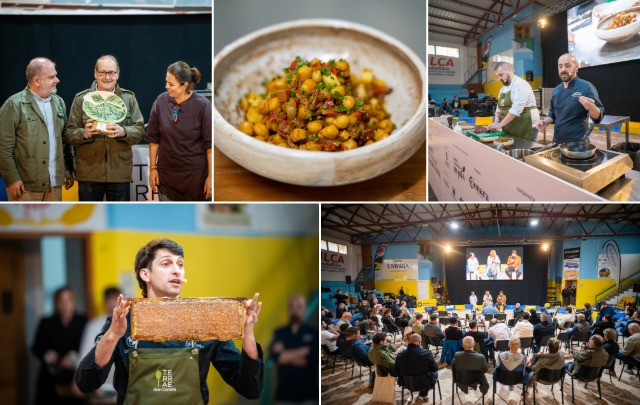
Terrae Gran Canaria proposes creativity and commitment as key to revitalizing rural areas through gastronomy
The 4th International Conference on Rural Gastronomy brings together more than 50 rural chefs from Spain, Italy, Portugal, and Andorra in Gran Canaria
News
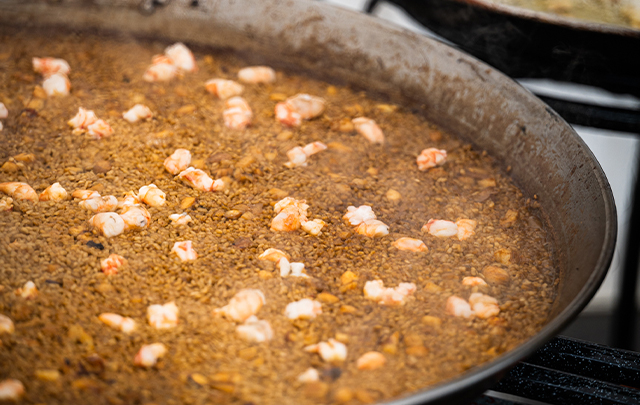
The popular food festival in Santa Brígida was a huge success
The public event ran out of its more than 6.000 samples and drew a large crowd to Villa de Santa Brígida Municipal Park
News
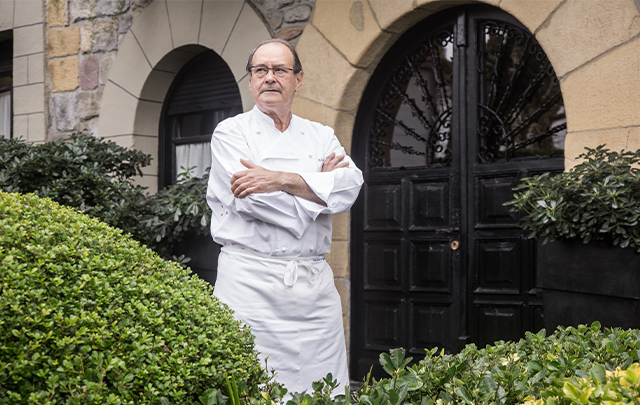
Hilario Arbelaitz to Receive the 2026 Terrae Award
News
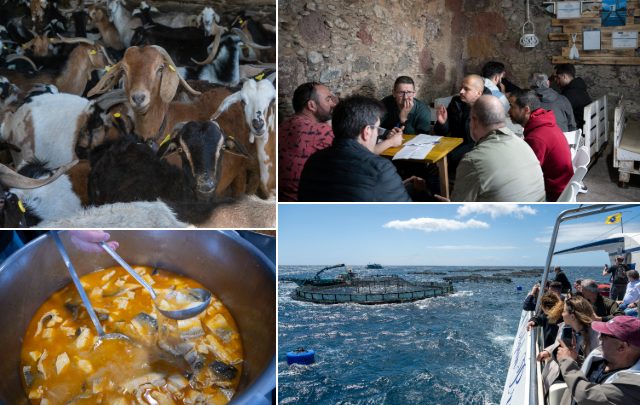
Agüimes Declaration: a commitment to the future of rural cuisine
The more than 50 rural chefs participating in Terrae 2025 have drawn up a document in which they declare rural cuisine to be a cultural heritage and commit themselves to preserving and promoting it.
News
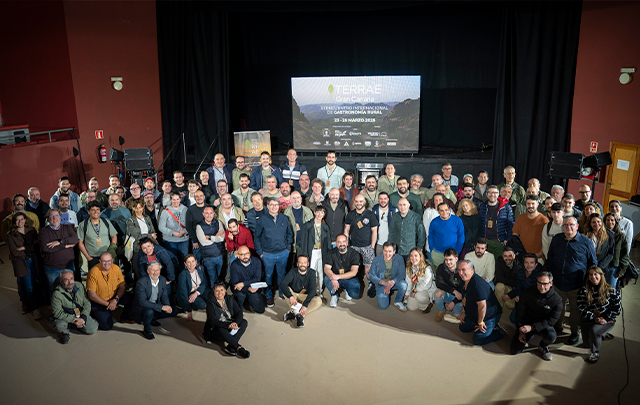
"The soul of cooking is in the villages"
Ignacio Echapresto calls for 'the luxury of immediacy', while Leonor Espinosa calls for a commitment to the rural environment.
News
The challenge is to create a differentiated product
News